Bedding · Natural-fiber layers
How Libeco’s Natural-Fiber Layers Bring Texture to a Room
A throw can change the character of a room without changing its furniture. In Libeco’s linen-rich layers, the details do the talking: a woven surface, a thoughtful mix of fibers, an easy fringe. Learn how to choose, style, and care for a textile that adds depth while keeping a space relaxed.
A room’s quietest statement is sometimes the one you can feel. The irregularity of a woven surface, the soft fall of fabric over an armrest, the contrast between a matte flax tone and a polished wood table: these small encounters give an interior its dimension. A natural-fiber throw is an especially flexible way to introduce that tactile depth. It can rest on a sofa, soften the foot of a bed, or bring a little warmth to a reading chair, then move elsewhere when the room calls for a change.
Libeco’s linen layers invite a closer look at how textiles shape a space. Linen has a distinctive, gently slubby character; in a blend, wool can add another dimension to the hand and the overall impression of warmth. Weave, finish, weight, color, and construction all play a part. Understanding those details makes it easier to choose a layer that suits both your room and the way you intend to use it.
The quiet design power of texture
Texture is not simply decoration. It changes how color reads, how light moves across a surface, and how different materials relate to one another. A smooth, tightly woven cushion beside a nubby throw feels more considered than two pieces with the same finish. A soft textile can temper the crisp geometry of a sofa or the clean lines of a bed, while a woven pattern lends structure to an otherwise plain palette.
That contrast need not be dramatic. Linen often brings variation through the yarn itself: subtle shifts in thickness and surface can make a solid color feel layered rather than flat. Fringe adds movement at an edge. A washed finish can contribute a relaxed, lived-in look. Together, these characteristics create visual interest without relying on a bold motif or a high-contrast palette.
Think of a throw as a finishing layer, not a centerpiece that must dominate the room. If a living space already has patterned upholstery, art, or a richly veined stone surface, a restrained weave can offer balance. In a neutral room, a striped or plaid design can introduce rhythm while remaining connected to the palette. The aim is not to match every element; it is to let materials speak to one another.
What linen brings to a room
Linen is made from flax fiber and is known in interiors for its natural-looking texture and relaxed drape. The fabric’s surface can show small irregularities that give it character. Rather than reading as perfectly uniform, linen often feels individual and tactile, an appealing counterpoint to the precision of glass, lacquer, or metal.
In a throw, linen’s contribution depends on how it is woven and what other fibers are present. A linen-and-wool blend, for example, should not be assumed to feel or behave exactly like pure linen. Each fiber has its own qualities, and the proportion, yarn, and construction influence the final textile. Product specifications are therefore more useful than a general label alone: look for the stated composition, weave, weight, and care guidance before making assumptions about warmth or maintenance.
Libeco’s Montana Throw Grey is a useful illustration of how several textural cues can work together. Its listed composition is 49% wool, 27% linen, 19% viscose, and 5% polyamide. The construction combines herringbone and plain weave, with a washed finish and flax-colored fringe. Those details give the throw a varied surface: the herringbone creates a directional pattern, while the plain-weave sections offer a quieter counterpoint. The fringe makes the ends feel finished without introducing a separate decorative motif.
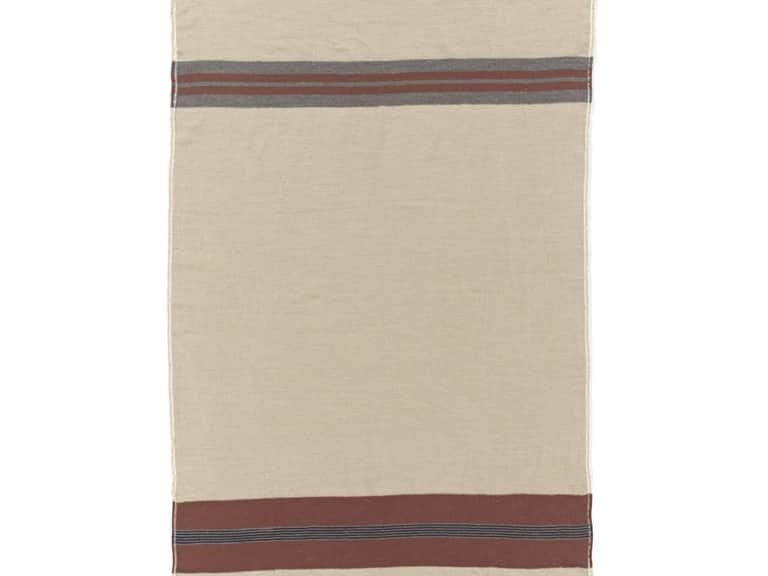
For a different expression of linen and wool, the Sienna Throw is described as an artisanal throw made from linen and wool yarns, with natural variations in the fabric. That concise description points to a quality worth appreciating in handcrafted-looking textiles: minor irregularities can be part of the material’s character, rather than a flaw to be corrected. If you prefer a highly uniform surface, this is a distinction to consider. If you enjoy textiles with a more individual feel, such variation may be part of the appeal.
Reading the weave
Weave describes how yarns interlace to form a fabric. For the home, it is helpful to think less in technical terms and more in terms of what the surface does visually. Does it create a directional pattern? Does it look compact or open? Is the surface smooth, softly raised, or visibly textured? These observations help you anticipate how a throw will sit beside other fabrics.
Herringbone has a repeated zigzag effect that gives a textile an orderly, almost tailored quality. It can add pattern without the impact of a large-scale print. Plain weave is visually quieter, which makes it a useful partner to more pronounced structures. When both appear in a single piece, as in the Montana Throw Grey, the contrast can add depth without requiring a new color in the room.
Weight matters, too. A throw with more substance can fall in a broader, more grounded line over a sofa or the foot of a bed. A lighter piece may fold and drape more readily, making it easy to reposition. Weight alone does not tell you exactly how warm a textile will feel: fiber blend and construction matter as well. Treat the listed specifications as a guide, then consider how you actually plan to use the piece—mostly as a decorative layer, for occasional extra warmth, or both.
Fringe is another detail with practical and visual consequences. It softens a straight edge and introduces a little movement, particularly when a throw is folded over a seat or laid across the end of a bed. On a patterned textile, fringe can reinforce a relaxed, artisanal mood. If you have pets or a busy household, however, you may want to consider how dangling ends will fare with frequent use and handling.
A thoughtful palette, not a perfect match
Natural-fiber layers are often easiest to style when the palette has room for variation. A flax-colored fringe, a grey ground, or a subtle stripe can connect with wood, stone, ceramics, and upholstery without matching any one element exactly. Instead of searching for identical shades, look for a shared undertone: warm neutrals beside warm timber, soft greys beside cooler stone, or a muted accent that echoes a small note elsewhere in the room.
In a bedroom, lay a throw across the lower third of the bed or fold it neatly at the foot. This gives the bedding a second surface and creates a visual boundary between the larger expanse of the duvet and the furniture below. A plaid or textured weave can make plain bedding feel more composed, while a restrained layer can keep an already patterned bed from becoming too busy. Leave enough of the bed visible to appreciate the bedding itself; the throw should add a note, not conceal the arrangement.
In a living area, try a loose fold over one sofa arm or across the back of a chair. A carefully casual placement can make a room feel welcoming without looking staged. If the furniture already has strong lines, let the textile soften them. If the upholstery is plush or patterned, choose a throw whose surface adds contrast rather than competing for attention. Repeating one of the throw’s colors in a book spine, cushion, or small object can help the arrangement feel intentional, but a perfect color match is rarely necessary.
How to choose a versatile layer
Before choosing a throw, start with the place it will live. A piece intended for the sofa may need to tolerate frequent folding and everyday contact. One reserved for a bedroom can be selected more for its relationship to the bedding and its appearance when laid across the foot of the bed. A reading chair may call for a size that offers comfortable coverage without trailing onto the floor.
- Check the fiber composition. Linen, wool, and other fibers contribute different qualities. Read the full blend rather than relying on the broad description “natural fiber.”
- Consider the construction. A herringbone, plain weave, or mixed structure will bring a different visual rhythm and surface character.
- Look at the finish. A washed finish may signal a more relaxed appearance, while fringe or other edge details can influence how formal or casual the piece feels.
- Think about scale. Compare the throw’s dimensions with the bed, sofa, or chair where you plan to use it. A layer should feel proportionate rather than swallowed by the furniture or awkwardly small.
- Read the care label before buying. Washing and drying requirements are part of a textile’s everyday suitability, particularly if you expect to use it often.
Versatility is not the same as neutrality. A patterned throw can work in many settings if its colors relate to the room, and a quiet design can become a defining detail when its texture is distinctive. Consider whether you want the piece to blend into the background, provide a subtle contrast, or add a focal point. This simple choice can guide decisions about pattern, color, and placement more effectively than following a trend.
Care begins with the fiber blend
Good care is specific care. A linen-rich throw may look relaxed, but that does not mean every linen textile can be washed in the same way. Blended fabrics, fringe, finishing treatments, and the manufacturer’s construction choices can all affect the recommended method. Always follow the care instructions supplied for the individual piece; do not substitute a general linen routine for a product-specific label.
For the Montana Throw Grey, the listed instructions call for washing at a maximum of 30°C on a wool or hand-wash program. The throw should be unfolded fully before washing, and the machine should not be overloaded. Mild soap is recommended, chlorine bleach should be avoided, and line drying is preferable. If ironing is needed, the guidance specifies steam on slightly damp fabric. These details are particularly relevant for a mixed-fiber textile: the presence of wool and other fibers is a reason to respect the stated temperature and cycle rather than treating it as a straightforward cotton throw.
Before laundering any throw, check its label and inspect the care notes for drying instructions. Make sure the textile has enough room to move in the machine, and avoid adding products that the care guidance advises against. If the label recommends specialist cleaning or leaves a question unanswered, seek clarification before proceeding. A cautious approach is preferable to risking shrinkage, distortion, or damage to a textured surface.
Between washes, routine care can be modest. Shake the throw gently to release dust and restore its drape. Fold it loosely or place it over furniture rather than compressing it into a tight bundle. Keep it away from sharp fasteners and rough surfaces that might catch the yarns. These simple habits help a frequently used layer stay attractive without turning it into a precious object that is never enjoyed.
Texture that earns its place
A well-chosen throw does more than fill an empty corner. It can bring together a room’s existing materials, temper hard surfaces, and make a useful layer feel like part of the design. The pleasure is in the considered details: the direction of a herringbone, the shift from plain weave to pattern, a fringe that breaks a clean line, or the quiet variation of linen and wool yarns.
Libeco’s natural-fiber layers offer a reminder to choose by looking closely rather than by name alone. Read the composition, consider the weave and finish, and imagine the textile in the room where it will be used. A relaxed grey layer such as the Montana Throw Grey can sit comfortably among muted tones, while an artisanal piece like the Sienna Throw can bring interest through its natural fabric variations. In either case, the right throw is one that feels at home in your space—and whose care requirements make sense for your everyday life.