Bedroom & Linen Guide
Why Linen Makes a Breathable Layer for the Bedroom
A linen throw brings an easy, tactile finish to a bed: light enough to fold back, expressive enough to change the mood of a room. Its open character, relaxed drape and natural creases make it a distinctive layer for reading, resting and cooler evenings.
The most inviting beds are rarely composed of warmth alone. They balance layers, surfaces and proportions, giving the eye a place to pause and the body a choice about how much covering feels right. A linen bed throw is particularly suited to this kind of thoughtful layering. It can rest across the foot of the bed, be drawn over the legs during a quiet hour, or be set aside when the room feels warm. The effect is more considered than a heavy blanket left permanently in place: a soft accent with a practical purpose.
Linen’s appeal is not simply that it looks natural. The fiber and the way it is woven shape how a piece feels, moves and behaves in a room. A linen throw blanket tends to have a fluid, slightly irregular surface rather than the dense, uniform finish of some heavier textiles. It can feel airy in the hand, while still offering a welcome degree of coverage. Those qualities make linen useful as a flexible bedroom layer, particularly in spaces where temperature shifts between afternoon, evening and morning.
A lighter layer, not a substitute for bedding
A throw is best understood as an adaptable accent rather than a replacement for a duvet, comforter or blanket intended to provide consistent overnight insulation. Its smaller dimensions and lighter construction make it convenient for moments when a little additional coverage is welcome. You might reach for it while reading in bed, use it to soften the look of a neatly made duvet, or keep it folded nearby for a cool morning.
That distinction matters because comfort is personal and room conditions vary. A breathable-feeling textile does not automatically make a bed cool, nor does a natural fiber guarantee a particular temperature throughout the night. The throw’s weight, weave, size and finish all contribute to its feel. If a bedroom is especially warm, a lighter, more open construction may feel preferable to a dense, substantial blanket. In a cooler room, the throw can be used over other bedding as a small, convenient supplement.
Linen is valued for its relaxed, breathable character, but it is still a textile layer. Its performance depends on the cloth itself and on how it is used. Rather than expecting a throw to regulate a whole sleep environment, consider the practical question: does it offer a comfortable, easy-to-move layer for the occasions when you want one? For many bedrooms, that modest versatility is precisely the point.
What weave and texture bring to the bed
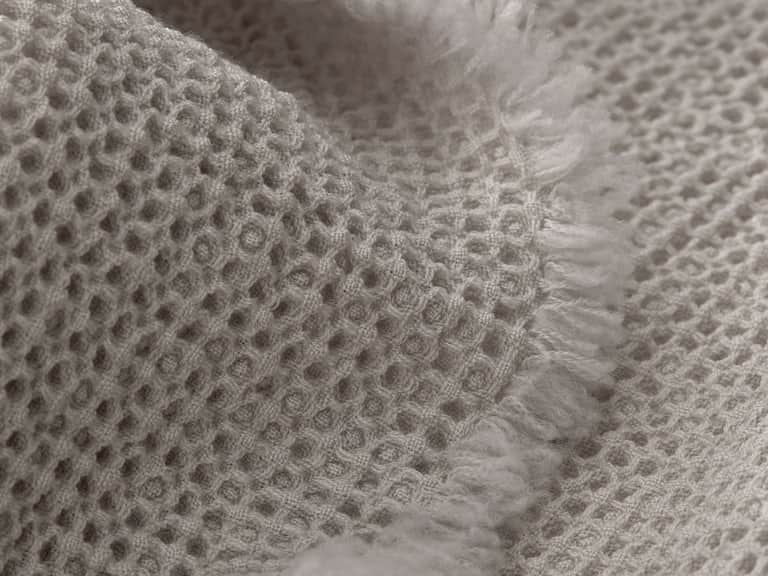
Weave gives a textile much of its personality. A close, compact weave can produce a smooth and contained surface; a more dimensional weave introduces small changes in height, shadow and touch. The St Genève Avalon Linen Throw offers a useful example of how linen can be made visually distinctive without feeling overworked. Its honeycomb weave creates a gently raised pattern, adding texture while preserving a light, airy impression.
A honeycomb structure gives the surface a subtle geometry. The pattern catches light differently across its raised and recessed areas, so the throw can look softly sculptural even in a quiet color. This kind of texture is especially effective in a bedroom built around plain bedding. A white or neutral duvet cover may feel more layered with a woven throw across its foot, while the overall palette remains calm. Rather than relying on a bold print, the weave provides interest through depth and shadow.
Texture also affects drape. A piece that falls easily can be arranged in a loose fold, laid across the bed with its edges relaxed, or gathered at one corner without appearing stiff. A more structured blanket may hold a sharper line, which can look elegant but less casual. The right choice depends on the atmosphere you want: crisp and tailored, or gently undone. Linen’s characteristic surface variation tends to suit interiors where lived-in ease is part of the design.
No two styling arrangements need to be identical. A carefully squared fold creates a clean horizontal band at the foot of the bed. A looser placement brings a sense of movement, especially when the bed itself is made with simple sheets and minimal decoration. The goal is not to eliminate creases or make the throw look untouched. Natural folds are part of linen’s visual language, and they can make a bedroom feel welcoming rather than staged.
Choosing the right position and proportion
Before arranging a linen bed throw, consider the scale of the bed and the dimensions of the textile. A throw should look intentional without needing to cover the entire mattress. On a larger bed, a narrow folded strip can create a clean accent, while a wider placement may feel more generous and useful. On a smaller bed, too much fabric can overwhelm the arrangement or spill awkwardly over the sides.
The Avalon Linen Throw measures 49 by 70 inches. As a reference point, that size can work as a foot-of-bed layer or as personal coverage for sitting and reading. A bed’s width, mattress height and surrounding furniture affect how those dimensions appear in practice, so it helps to think about the throw’s intended position. If you want a tidy band across the foot, fold it lengthwise until it reaches the visual width you prefer. If you want a more relaxed finish, allow more of the textile to spread across the bed.
- For a composed look: fold the throw into a long, even band and position it near the foot of the bed.
- For a softer arrangement: lay it diagonally or allow one end to fall naturally over the side.
- For practical reach: keep it within easy access from the side of the bed where you read or rest.
- For a small room: avoid a bulky fold that competes with the bed’s outline or obstructs nearby furniture.
Proportion is as important as color. A narrow fold can give a bed a clear finishing line; a broader spread feels more casual and substantial. If the throw has a textured weave, let the surface remain visible rather than hiding most of it beneath several folds. A restrained arrangement allows the craftsmanship and material to do the work.
Color, contrast and the quiet appeal of linen
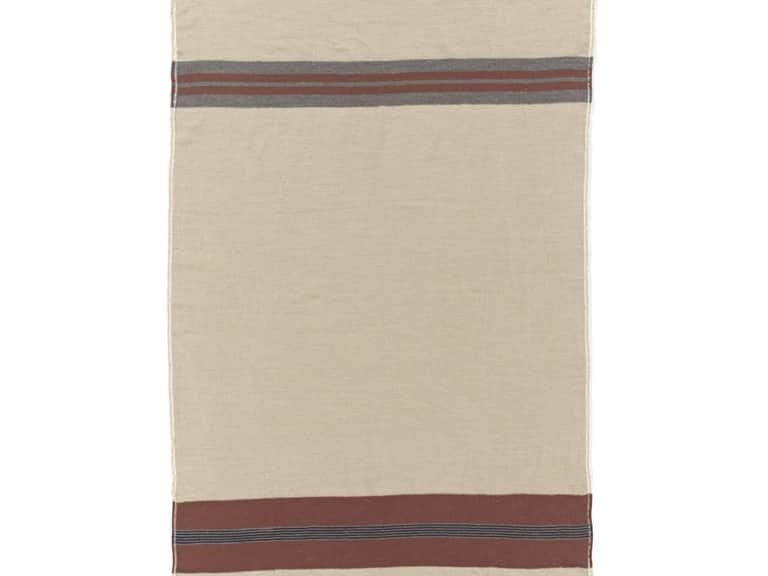
Linen is often associated with pale, natural colors, but its styling potential extends beyond an all-neutral room. A soft white or undyed-looking throw can blend into light bedding, creating depth through texture rather than contrast. Against darker sheets, it becomes a gentle highlight. A muted tone can connect the bed to wood, woven baskets, a wool rug or other natural surfaces without making the room feel coordinated to the point of formality.
When building a palette, choose one or two relationships to emphasize. A tonal scheme can pair warm white with flax, sand or pale stone. A more defined composition might set a light linen throw against charcoal, forest green or deep blue bedding. The purpose is not to follow a strict rule but to give the eye a rhythm: a quiet field, a textured interruption, and perhaps a small echo in another element of the room.
Texture makes this restrained approach especially effective. A honeycomb weave introduces detail without adding a second pattern that competes with the bedding. If the duvet already has a stripe or print, a textured solid can create balance. If the bedding is plain, the weave can serve as the room’s understated point of interest. Either way, the effect remains versatile because the throw can be moved, folded or removed as the room changes.
Care that respects the fiber
Good linen care begins with the specific instructions supplied for the textile. Fiber content, weave, finishing and construction can all affect what a piece tolerates. The Avalon Linen Throw’s care guidance emphasizes a careful wash: avoid crowding the machine, use ample water, choose a moderate temperature, and use very little detergent. Fabric softener, bleach and detergents containing whiteners or alkaline ingredients are discouraged. The guidance also recommends avoiding over-drying.
These details are worth following rather than replacing with a generic “linen wash” routine. A crowded machine can create unnecessary friction and may make it harder for detergent to rinse away. Too much detergent can leave residue in the fibers. High heat and over-drying can be unnecessarily harsh, particularly for a textile whose natural surface and drape are part of its appeal. When instructions recommend a fabric bag to help prevent snags, use one if available, and check that the care setting suits the item’s construction.
Between washes, regular airing and gentle handling can help keep a throw feeling fresh. Fold it loosely or drape it over a rail for a short time rather than compressing it tightly in a crowded cupboard. If a spill occurs, consult the care instructions before treating it; vigorous rubbing or an untested cleaning product may affect the weave or finish. For stains, prompt and careful attention is generally more sensible than waiting until the mark has set, but the method should suit the fabric and the stain.
Creases do not necessarily indicate that linen is poorly cared for. They are part of the fabric’s characteristic appearance. If you prefer a smoother finish, the Avalon care notes allow ironing with appropriate care, while emphasizing moderate handling. A relaxed surface is equally valid. The choice is aesthetic: crisp linen can look composed and formal, while a naturally creased surface feels softer and more informal.
How a linen throw compares with other layers
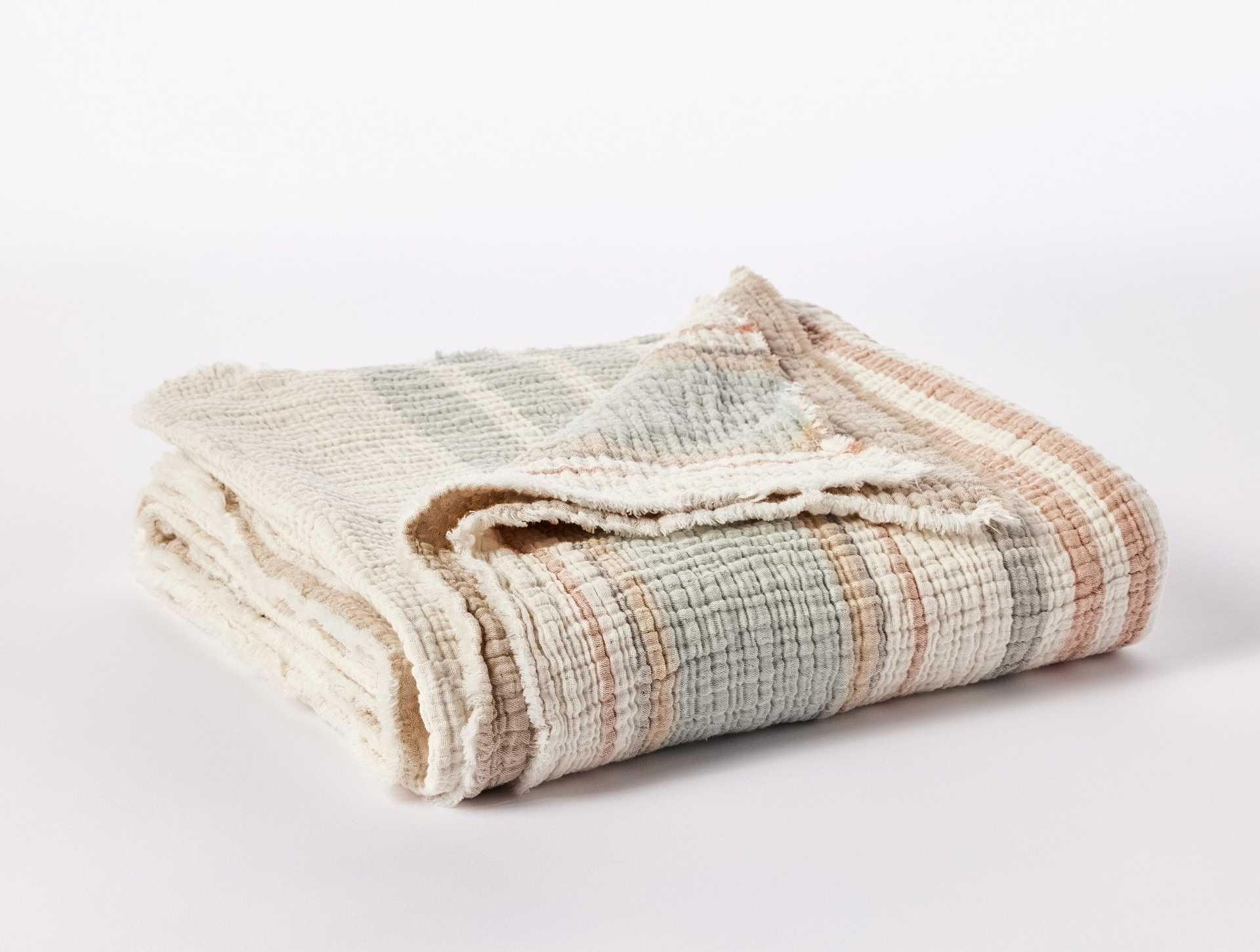
A bedroom may contain several types of throws and blankets, each with a different tactile role. A wool throw, for example, typically signals a warmer, more insulating layer. A cotton matelassé throw can offer a lightweight, rippled surface and practical washability, depending on its care label. Linen has its own balance: a characteristic texture, a relaxed drape and an airy impression that makes it easy to place over other bedding without necessarily adding a heavy visual mass.
The best choice is not determined by fiber name alone. Compare the fabric’s weight, construction, dimensions and maintenance needs. A dense wool textile may suit a cold room or a reader who wants pronounced warmth. A lightweight linen throw may be more appealing when you want an easy accent that can be used briefly and moved aside. A washable cotton layer may make sense in a household where frequent laundering is a priority. Each has a different purpose, and the most useful bedroom can accommodate more than one.
If you are deciding between options, consider how often the piece will be used and where it will live when not in use. A throw that is easy to fold and keep within reach may become part of a daily routine. One that requires more specialized care may be better suited to occasional use or a more protected setting. These practical considerations are not separate from style; they determine whether the textile remains a pleasure to live with.
A considered layer for everyday living
A well-chosen linen throw does not need to transform a bedroom. Its contribution is subtler: a little more texture, a useful option for a cool moment, and a visual finish that can be changed in seconds. The honeycomb weave of the St Genève Avalon Linen Throw illustrates how construction can give a lightweight textile depth and character. Its 49-by-70-inch dimensions make it a practical scale for a bed accent or personal layer, while its care guidance rewards a deliberate approach to laundering.
For the best result, start with the room’s needs rather than an idealized image of a perfectly styled bed. Think about temperature, available space, your preferred level of coverage and how much maintenance feels reasonable. Then choose a position that lets the throw’s texture show. It may sit in a neat fold at the foot of the mattress, fall softly over one edge, or wait nearby until evening.
That flexibility is the enduring appeal of a linen bed throw. It is decorative without being merely decorative, useful without demanding a fixed place, and composed without feeling precious. In a bedroom built for rest, those qualities add up to a kind of everyday luxury: a breathable-feeling layer that responds to the room, the season and the moment.