Bedding & Bedroom Styling
Choosing a Bed Layer for Texture, Proportion, and Seasonal Comfort
The final layer at the foot of a bed can make a bedroom feel considered rather than merely dressed. Choose it for its texture, scale, and usefulness, and it will bring the whole arrangement together—without competing with the quiet pleasure of climbing in.
A bed layer is a small decision with an outsized effect. Folded neatly across the foot of the mattress, it introduces a deliberate line; draped more loosely, it softens the bed’s geometry and gives the room an easy, lived-in quality. It can add a little warmth when the evening turns cool, offer a place to rest a book or a breakfast tray, and lend contrast to smooth sheets and plump pillows. Most importantly, it can do all of this without requiring a wholesale change to the bedding.
The art is in the balance. A bed throw should feel like a natural extension of the room, not an afterthought or a layer that overwhelms everything beneath it. Fabric, proportion, color, and placement each make a difference. Linen, with its softly irregular surface and breathable character, is one appealing choice, but it is only one possibility among many. The right bed layer is the one that suits the climate, the bed, and the way the room is actually used.
Begin with the atmosphere of the room
Before settling on a particular weave or shade, take in the bedroom as a whole. Consider the headboard, the finish of the bedside tables, the curtains, and the bedding already in place. Are the dominant surfaces smooth and polished, or textured and relaxed? Is the palette warm and earthy, crisp and pale, or built around a deeper accent color? A bed layer can echo one of these existing qualities—or introduce a quiet counterpoint.
In a room with crisp cotton sheets and a tailored duvet, a washed linen throw brings a gentle note of informality. Its natural creases interrupt the smoothness without making the bed look untidy. A fine knit, by contrast, can make a pared-back arrangement feel softer and more intimate. A woven pattern can add visual interest where the rest of the bedding is plain, while a solid neutral can give a patterned duvet room to breathe.
Think in terms of texture rather than decoration alone. When color stays within a restrained range, differences in surface do much of the work: a matte, rumpled fabric against a smooth cover; a raised knit against flat percale; or a lightly brushed layer over a clean, crisp bed. The effect feels layered and dimensional, yet remains calm.
What linen brings to a bed
Linen is made from flax and is valued for its distinctive texture, natural breathability, and easy, relaxed drape. On a bed, those qualities make it especially suited to a room that should feel welcoming rather than overly formal. A linen throw can soften a sharply made bed, add a pleasingly tactile surface, and serve as a useful extra covering without necessarily becoming a heavy blanket.
Weight and construction matter, however. A lightweight linen layer falls in soft folds and can be arranged casually. A denser textile creates a stronger band of color and structure at the foot of the bed, and may provide more substantial warmth. A washed finish often has a relaxed hand from the outset, while a crisp linen can feel more defined and architectural. Neither is universally better; the choice depends on whether you want the layer to recede into the bedding or become a more noticeable feature.
Linen’s natural creasing is part of its character. It is not a fabric that needs to look perfectly pressed to feel composed. In a bedroom, that ease can be an advantage: a few soft folds signal comfort and use, rather than disorder. If you prefer a more tailored finish, fold the throw into a clean rectangle and align its edges with the mattress. If you want a softer mood, let one end fall slightly over the side.
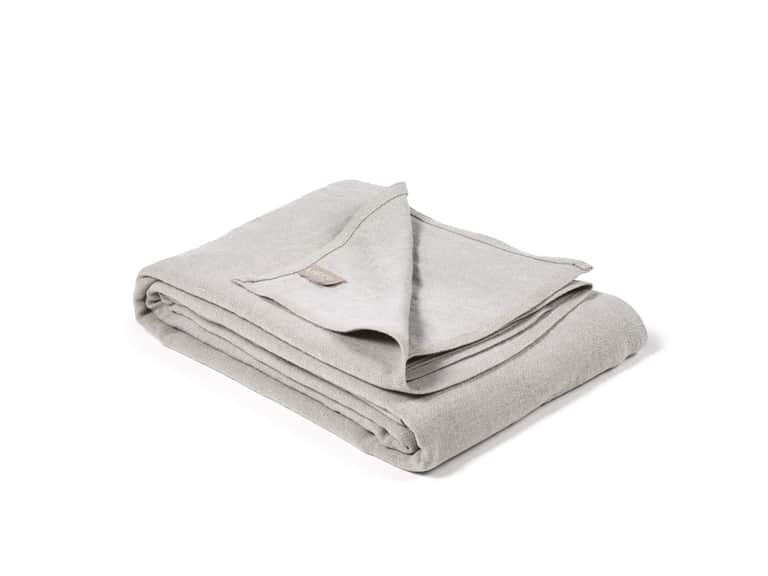
A fully linen option such as the Hudson Blanket offers one example of a breathable bed layer with a stonewashed finish and a refined, lived-in feel. Its European flax and linen construction make it relevant to a natural-fiber palette; its overall effect will depend on how its scale and weight relate to the particular bed and bedding around it.
Get the proportions right
The most elegant bed layer is rarely chosen by name alone. Its dimensions should make sense in relation to the bed’s width and the amount of coverage you want. A narrow throw can create a precise accent across the foot of a bed, while a wider one may cover more of the mattress and fall toward the sides. A longer layer can be folded back on itself, giving you more flexibility in how much fabric is visible.
Start by measuring the mattress width, then consider the bed’s height and the desired drop over each side. For a centered, folded arrangement, a layer that does not extend far beyond the mattress edges can feel neat and intentional. If you want it to drape, allow enough width for a modest fall on either side. A throw that is too narrow may look like a small strip placed on top; one that is disproportionately wide can obscure the bedding and make the foot of the bed feel heavy.
Length is equally important. A short layer placed at the very edge can look abrupt, while a long one folded several times may create an unnecessarily bulky band. Use the bed’s visual proportions as your guide: a tall headboard and substantial mattress can accommodate a more generous fold; a low-profile frame may look best with a lighter, less imposing layer.
- For a crisp, centered look: Fold the layer lengthwise into a tidy band and place it evenly across the foot of the bed.
- For a relaxed, generous look: Drape it across the lower third of the mattress, allowing a small, balanced drop at the sides.
- For a narrow bed or compact room: Choose a lighter visual weight and avoid excessive folding that creates a bulky block.
- For a broad bed: Make sure the layer has enough width to read as intentional from across the room.
These are starting points, not rules. A throw can be folded in half, thirds, or left almost open. The best placement is one that looks balanced from the bedroom doorway and remains easy to lift when it is time to sleep. If the arrangement needs constant adjustment to stay in place, simplify it.
Use visual weight, not just color
A bed layer’s visual weight comes from more than its hue. Thickness, weave, surface texture, fringe, and pattern all affect how prominent it appears. A pale, chunky knit may draw more attention than a darker, fine-woven linen because its raised surface catches the eye. Fringe can create a soft edge, while a clean hem looks more tailored. A dense plaid introduces a stronger graphic statement than a quiet, tone-on-tone weave.
When a duvet or coverlet already has a pronounced pattern, a simpler throw often provides a welcome pause. Choose a color drawn from the existing design and let texture do the rest. On a nearly monochromatic bed, a subtle stripe or a tonal knit can add interest without breaking the room’s sense of calm. If you do want a contrasting color, repeat it somewhere else—a cushion, a ceramic lamp, or a small detail in the artwork—so the throw feels connected to the room rather than isolated.
Scale patterns thoughtfully. Fine stripes and small checks tend to feel quiet from a distance; large plaids and broad bands become focal points. A patterned layer can be especially effective on an otherwise simple bed, but it should not have to compete with several other strong patterns at once. A little restraint makes each texture easier to appreciate.
Layer for the season—and for the way you sleep
A decorative layer can also be practical, but warmth should be considered alongside appearance. In a heated bedroom or a mild climate, a lightweight linen throw may be enough to take the chill off at dawn. It can stay folded at the foot of the bed, ready to pull up when temperatures dip. In colder conditions, a denser weave or a warmer fiber may be more useful, particularly if the bed needs an additional covering throughout the night.
For spring and summer, airy textures and lighter visual weight help a bed feel fresh. Linen and cotton layers can complement breathable sheets, while an open or fine construction avoids adding unnecessary bulk. In autumn and winter, consider a more substantial layer, a soft knit, or a refined blend that adds warmth without making the bed look crowded. The point is not to follow a seasonal formula but to respond to the room’s temperature and your own comfort.
There is also a difference between a bed layer that decorates and one that functions as bedding. A narrow folded throw may be beautiful but provide limited coverage. A larger blanket can be pulled over the body and may need to be laundered more regularly. If you expect to use it every night, prioritize comfort against the skin, ease of care, and enough size for the intended purpose. If it will mostly sit across the foot of the bed, its drape and visual character may take precedence.
Choose the right texture for the mood
Texture gives a bedroom its sense of depth. A linen surface introduces a softly crinkled, matte quality; an organic cotton knit adds dimensionality and a little give; a fine, smooth weave can preserve a more polished mood. Consider how the layer will meet the rest of the bedding. A coarse or heavily textured throw may feel compelling against smooth sheets, but less harmonious when paired with an already busy quilt or highly textured coverlet.
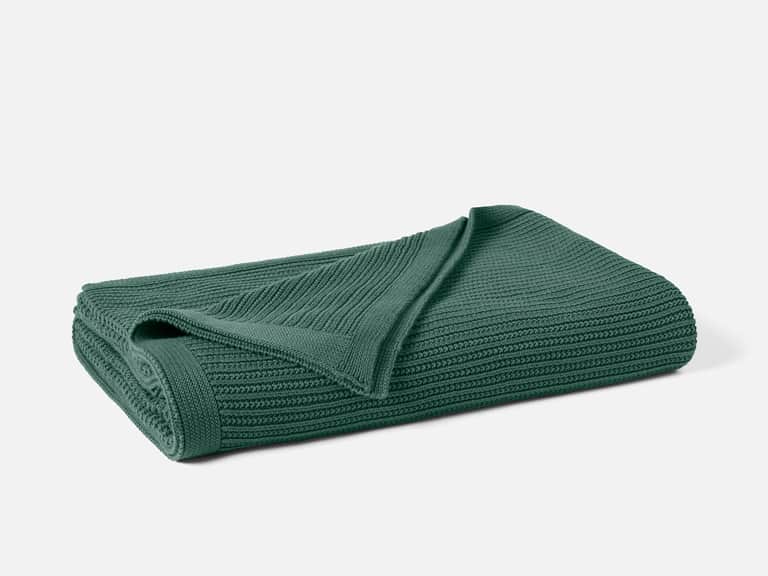
A knit such as the Linea Organic Knit Throw brings a different kind of surface to the bed. Its organic cotton construction and ribbed seed-stitch texture can lend a soft, tactile accent, while its breathable feel suits layering. Because knit can stretch, its placement may be more relaxed than sharply geometric. Let the material’s character guide the arrangement instead of trying to force it into a rigid fold.
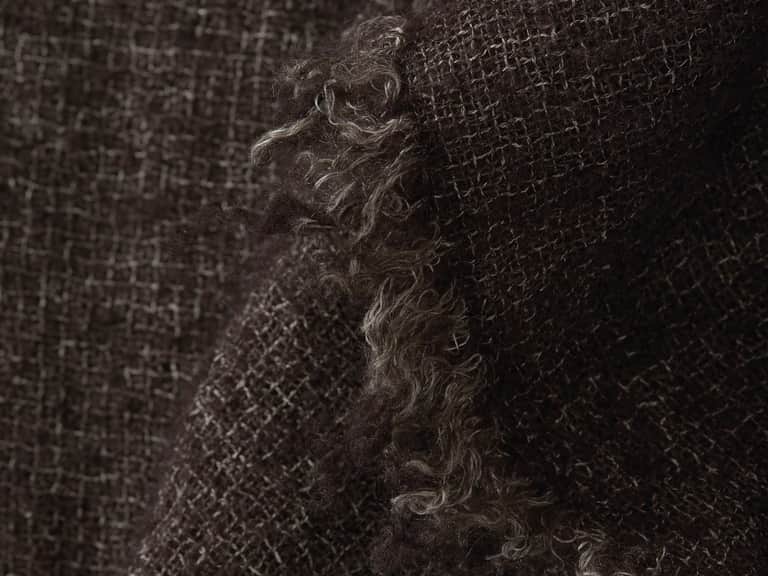
For an especially light and refined finish, the Tiub Throw combines cashmere and silk in a double-faced construction. Its soft, lightweight quality makes it suited to a more delicate layer on a bed or sofa. It is a useful reminder that warmth does not always have to come from visual bulk: a fine textile can feel luxurious and considered while leaving the bedding’s proportions undisturbed.
Color: quiet contrast or tonal continuity?
Color is most successful when it relates to the room’s wider palette. A tonal throw—one close to the sheets, duvet, or wall color—creates a subtle, layered effect. It is a good choice when the goal is a restful bedroom where texture rather than contrast takes the lead. Warm ivory, flax, soft gray, and muted earth tones can make natural-fiber bedding feel especially cohesive.
A contrasting shade brings a clearer focal point. Deep green, rust, blue, or charcoal can ground pale bedding, while a lighter layer can lift a darker bed. Keep the contrast deliberate: a single strong note often has more impact than several competing accent colors. If your bedding changes with the seasons, a neutral throw can move easily between combinations and remain useful year after year.
Remember that natural fibers and washed finishes may have subtle variations in tone and surface. These details give a textile depth, but they can make exact color matching less important than overall harmony. Instead of trying to reproduce a shade precisely, look for a related temperature—warm with warm, cool with cool—or a restrained contrast that feels balanced in the room’s light.
Placement that feels composed, not overworked
There are several reliable ways to style a bed layer. A straight fold across the bottom third creates a tailored finish and makes the bed appear neatly framed. A narrower band at the foot can add color without covering too much of the duvet. A loose drape is softer and more casual, particularly when the fabric has a fluid hand or natural creasing. For a particularly relaxed bedroom, place the throw slightly off-center, but keep the imbalance subtle enough to look intentional.
Take a step back before deciding. From the doorway, check whether the layer appears centered, whether its width is proportionate, and whether the color connects to something else in the room. Then consider everyday use: can you reach it easily? Does it slip to the floor? Is the fringe likely to catch beneath the bed or become tangled? A graceful arrangement should still work in real life.
It is worth resisting the temptation to add more simply because there is space. Extra pillows, another blanket, and several decorative cushions can make a bed feel crowded and complicate the room’s visual rhythm. A well-chosen layer often does enough on its own. Leave some of the bedding visible; negative space is part of the composition.
Care is part of the choice
A textile that looks beautiful but is difficult to maintain may not suit the way you live. Before choosing a bed layer, check its care instructions and consider how often it will be used. A regularly handled throw may benefit from an easy-care routine, while a delicate or dry-clean-only piece may be better suited to occasional use. Always follow the care guidance for the particular fabric rather than assuming that all natural fibers can be washed in the same way.
For linen, gentler washing and careful drying can help preserve the fabric’s texture and finish. Avoid unnecessary high heat, and do not overload the washer when laundering a larger blanket. If the item includes fringe, a special weave, or a fiber blend, pay attention to those details. Knitted textiles may stretch, so reshape them carefully and follow the maker’s instructions. Regular airing and thoughtful storage between seasons also help keep a layer fresh and ready to use.
Consider where the blanket will live when it is not on the bed. A folded layer can sit at the foot, rest in a nearby basket, or be placed on a chair. If it is always being moved out of the way, it may be the wrong size or too precious for its intended role. The ideal choice brings beauty into the room while remaining easy to reach, use, and care for.
A simple final check
Before committing to a bed layer, ask four questions. Does its material suit the season and the way you plan to use it? Are its dimensions appropriate for the width and height of the bed? Does its texture complement the bedding rather than compete with it? And does its care routine fit comfortably into your household?
If the answers are yes, the styling usually follows naturally. Fold it cleanly for a more formal bedroom, or drape it loosely for an atmosphere that feels softer and more personal. Let linen crease, let knit show its texture, and allow the surrounding bedding enough space to remain part of the composition. A considered bed layer does not need to announce itself. It simply adds the right note of warmth, tactility, and proportion—and makes the bedroom feel a little more like a place to linger.